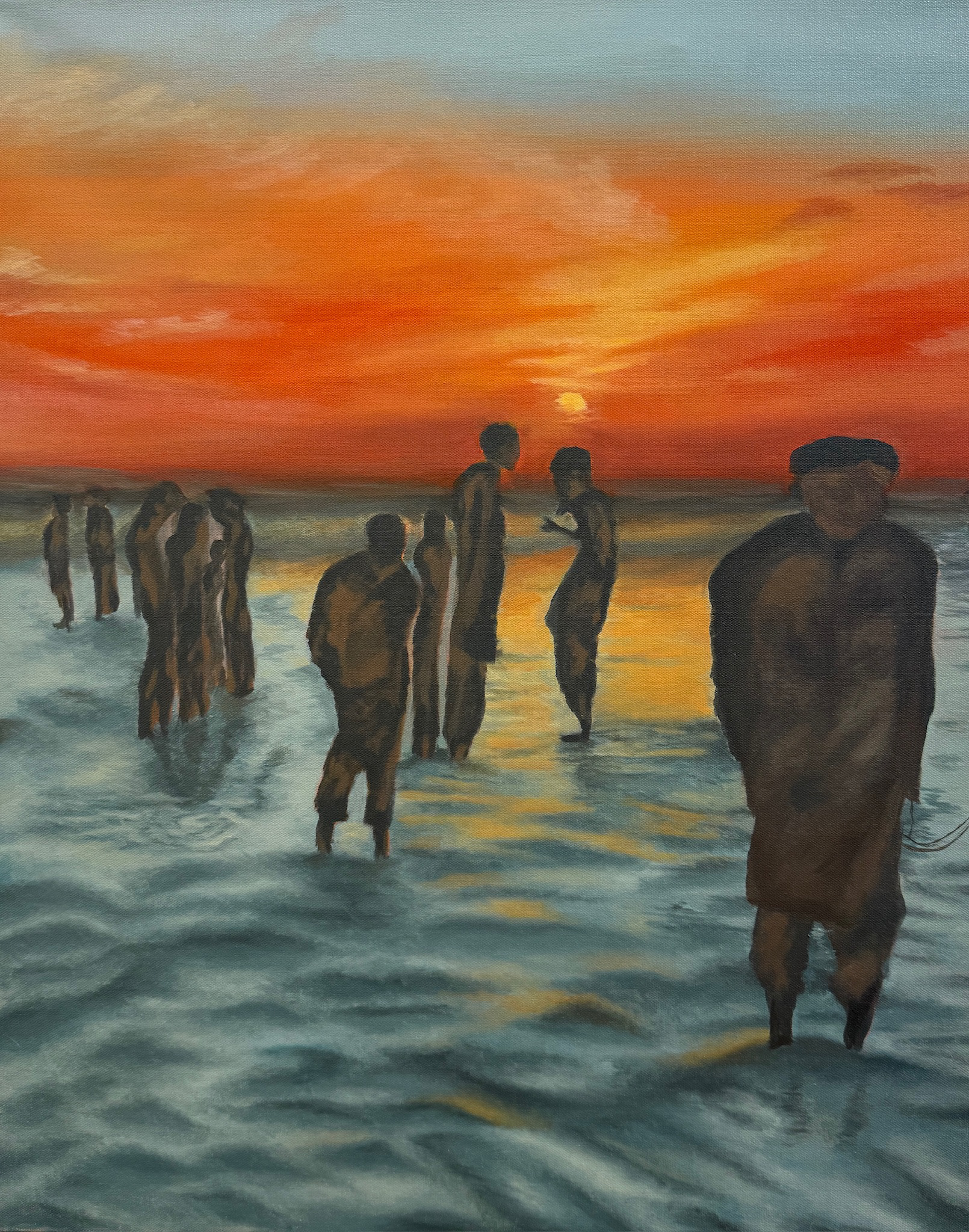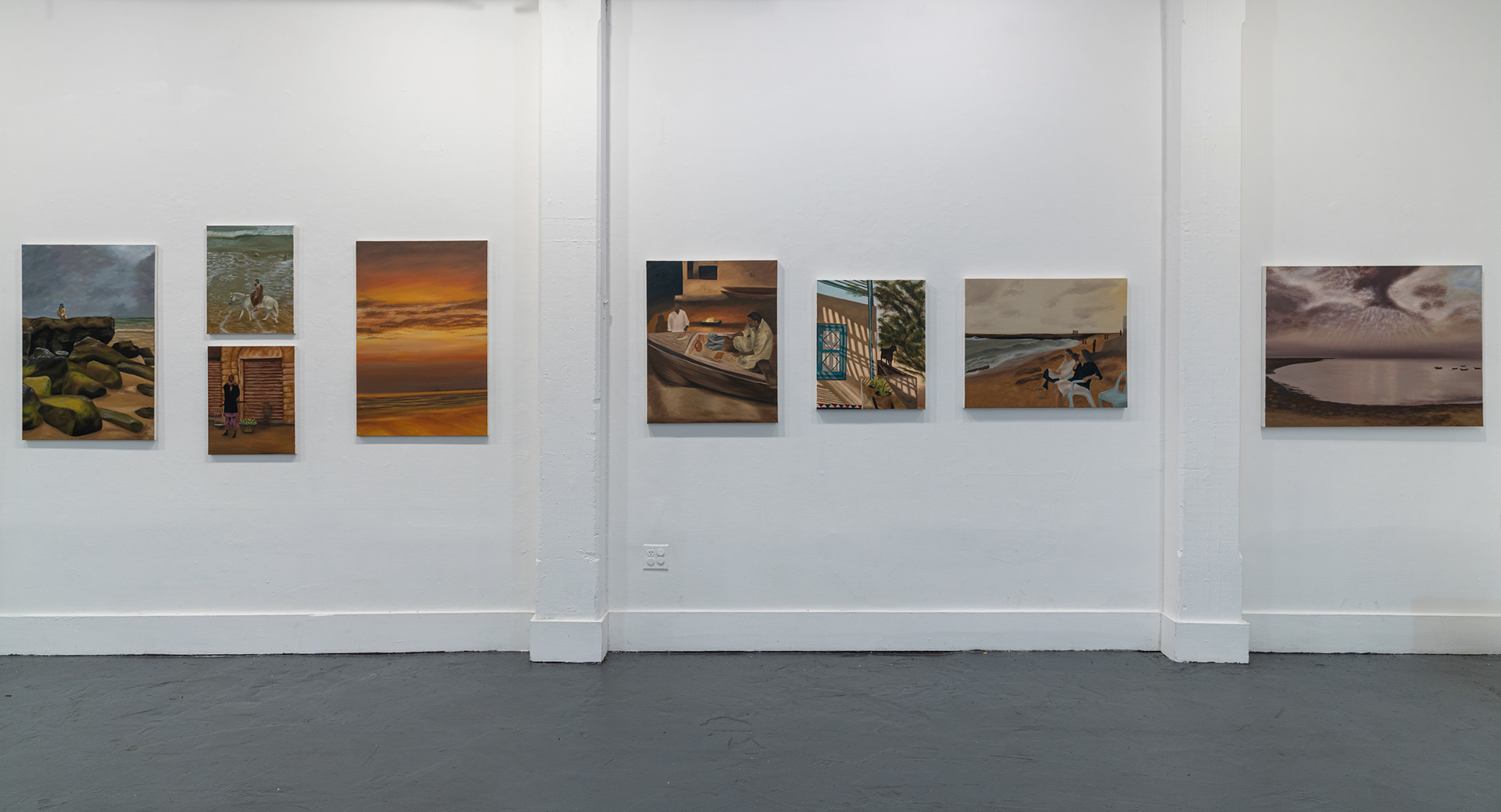
I paint the beach I grew up with. For me, it represents an irreconcilable contradiction. How can I at once long for and resent a landscape? In Karachi, I lived a very sheltered life where the class divide is unavoidably palpable, an unspoken reality. Life moves forward without questioning these disparities. Small, everyday interactions remind me of these inequalities, such as the people making seafood barbecues or offering horse rides along the shore. Their lives are shaped by economic constraints, yet these are the same experiences that define my childhood memories. The contrast between my nostalgia and their lived realities is a central tension in my work. The class disparity between those visiting the beach and those working to make ends meet is what first led me to explore this subject matter. I struggle to reconcile my desire to return to these spaces of beauty, family, and community with the knowledge of the oppressive economic environment that allows them to exist.
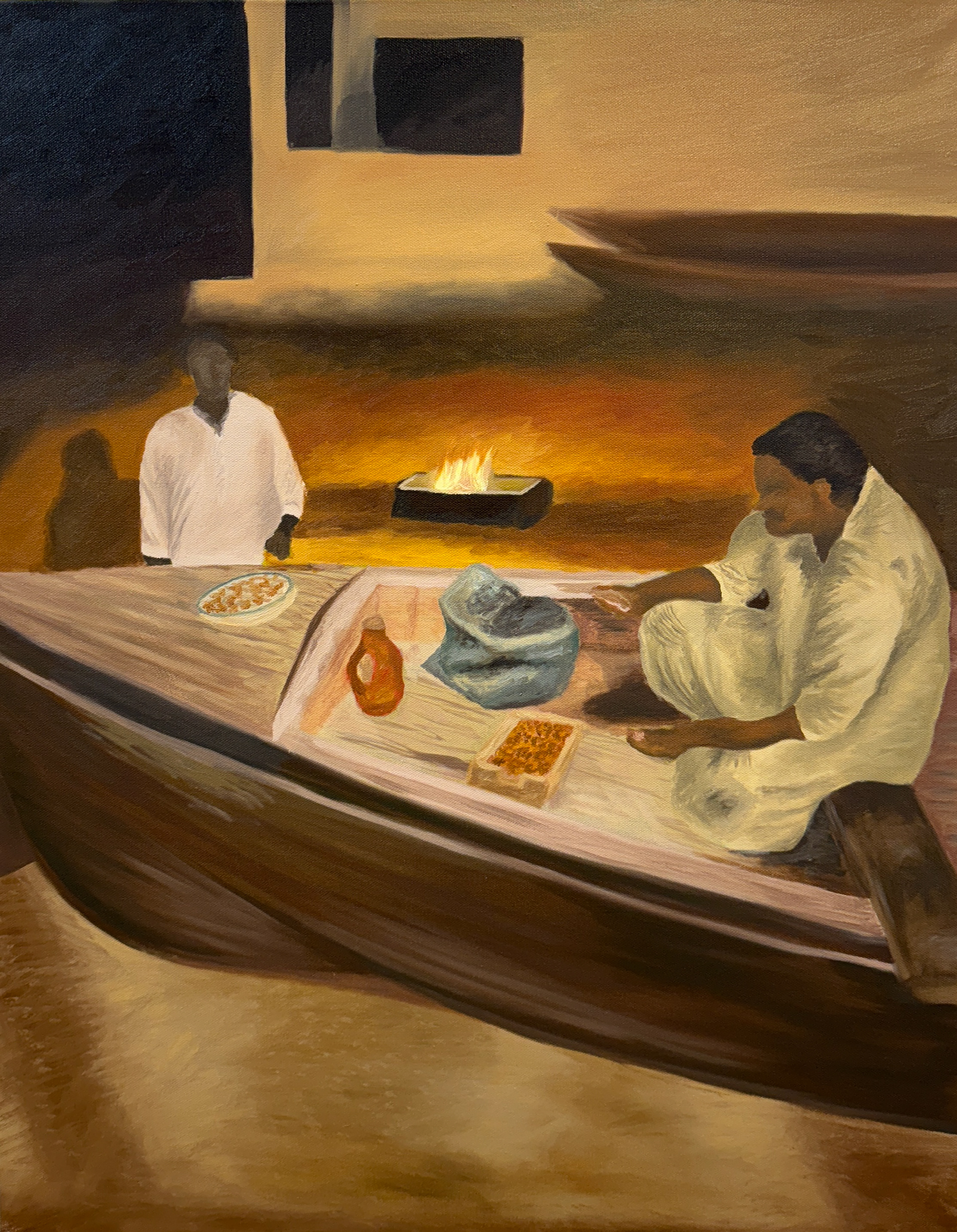
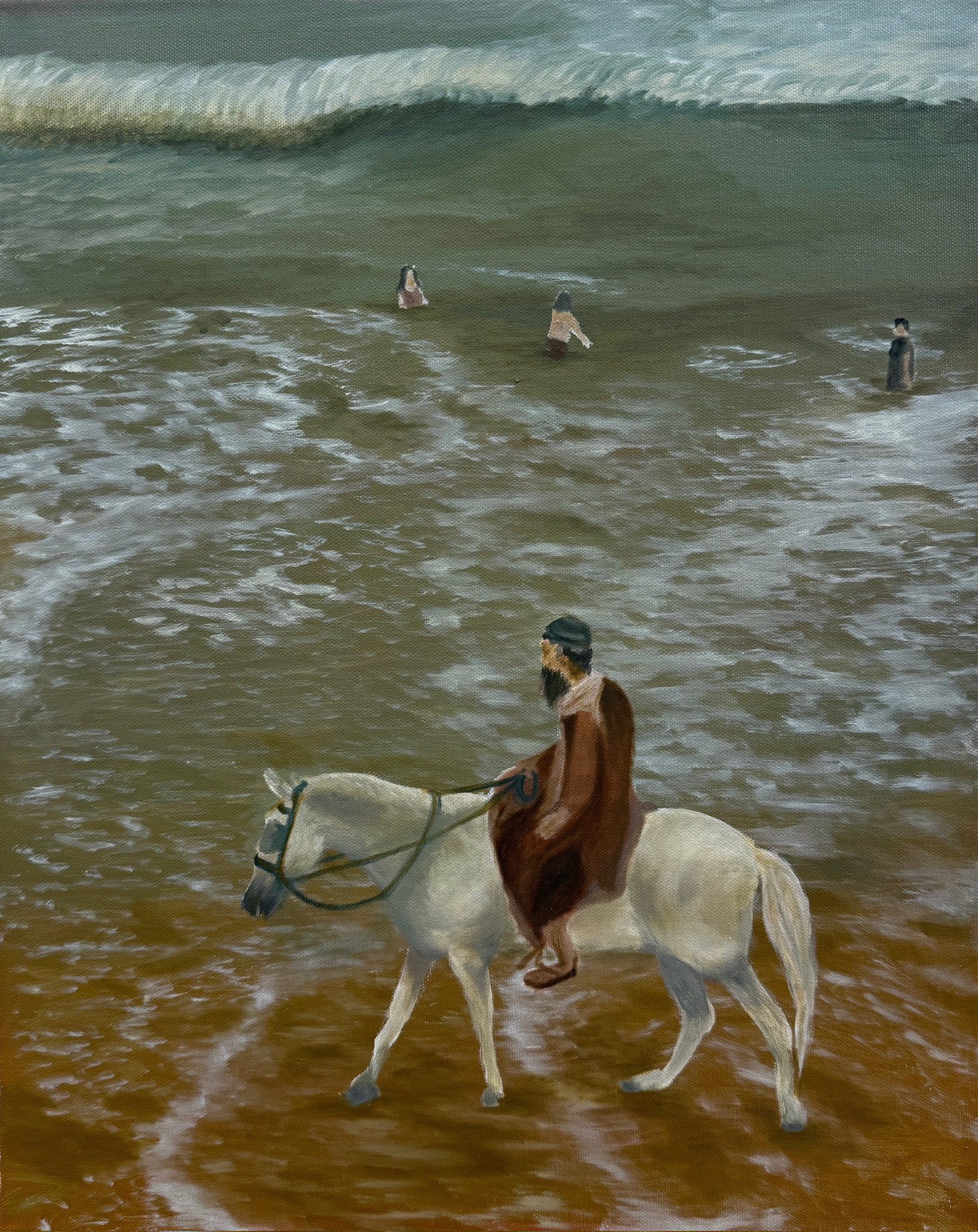
In my landscapes, I use clothing, particularly garments like shalwar kameez to tie in my culture. These garments function as the visual markers of identity that remain even as everything else shifts. In contrast, the water becomes its own kind of social character—fluid, undefined, and constantly changing. The fluidity of water raises questions about what a landscape even is: Can a landscape be something transient? Can it be a feeling? My work embraces that ambiguity.
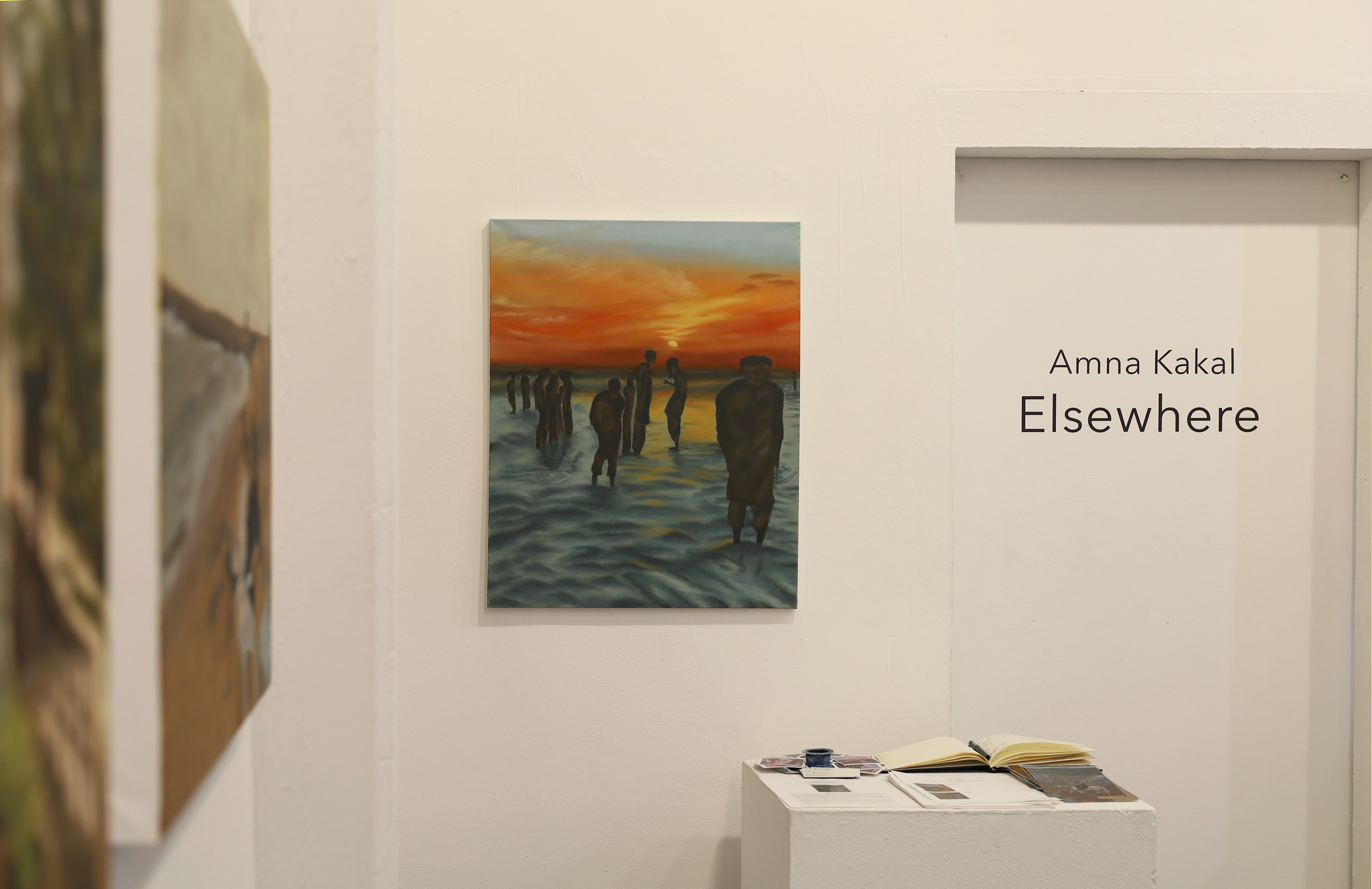
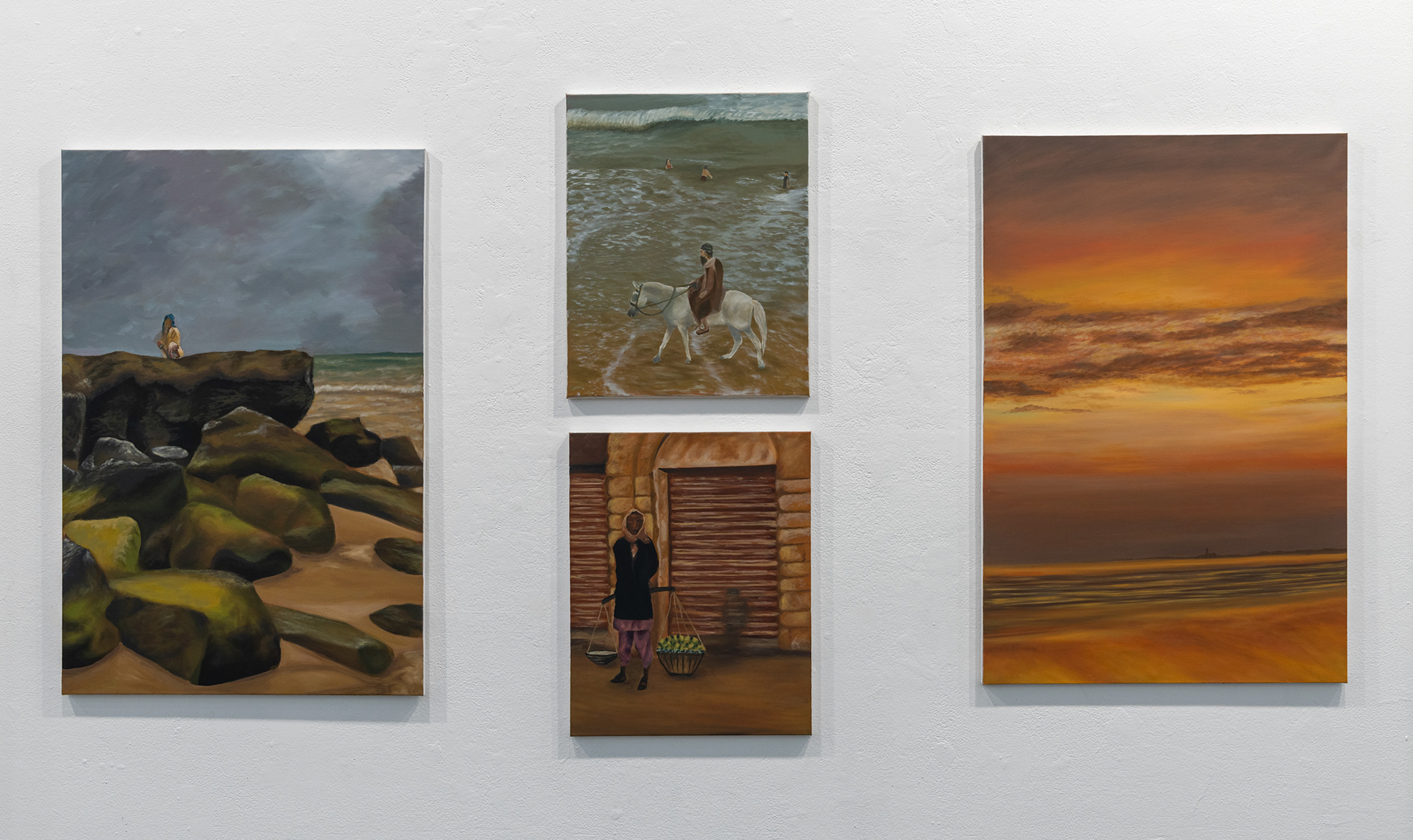
I often return to the work of Caspar David Friedrich—his figures stand alone, gazing into vast landscapes, evoking solitude. My work looks elsewhere. What distinguishes my landscapes is not their emptiness but a collective experience: the experience of being there. My figures remain faceless—their identities are secondary to the emotions and atmospheres they evoke. Details such as the boats, the plastic blue chairs, or the crowded shoreline imbue the compositions with a sense of familiarity, allowing viewers to recall landscapes from their own pasts.
My work circles around the idea of the sublime, that sense of awe we feel when faced with something vast and overwhelming. But for me, it’s not just about scale or grandeur—it’s about the quiet kind of sublime, those hazy, in-between moments of suspension. It is a reminder to myself that beauty and discomfort often coexist in the same frame. Landscape, in this light, ceases to be about a specific place; it is about a feeling, a way of remembering, a way of seeing.
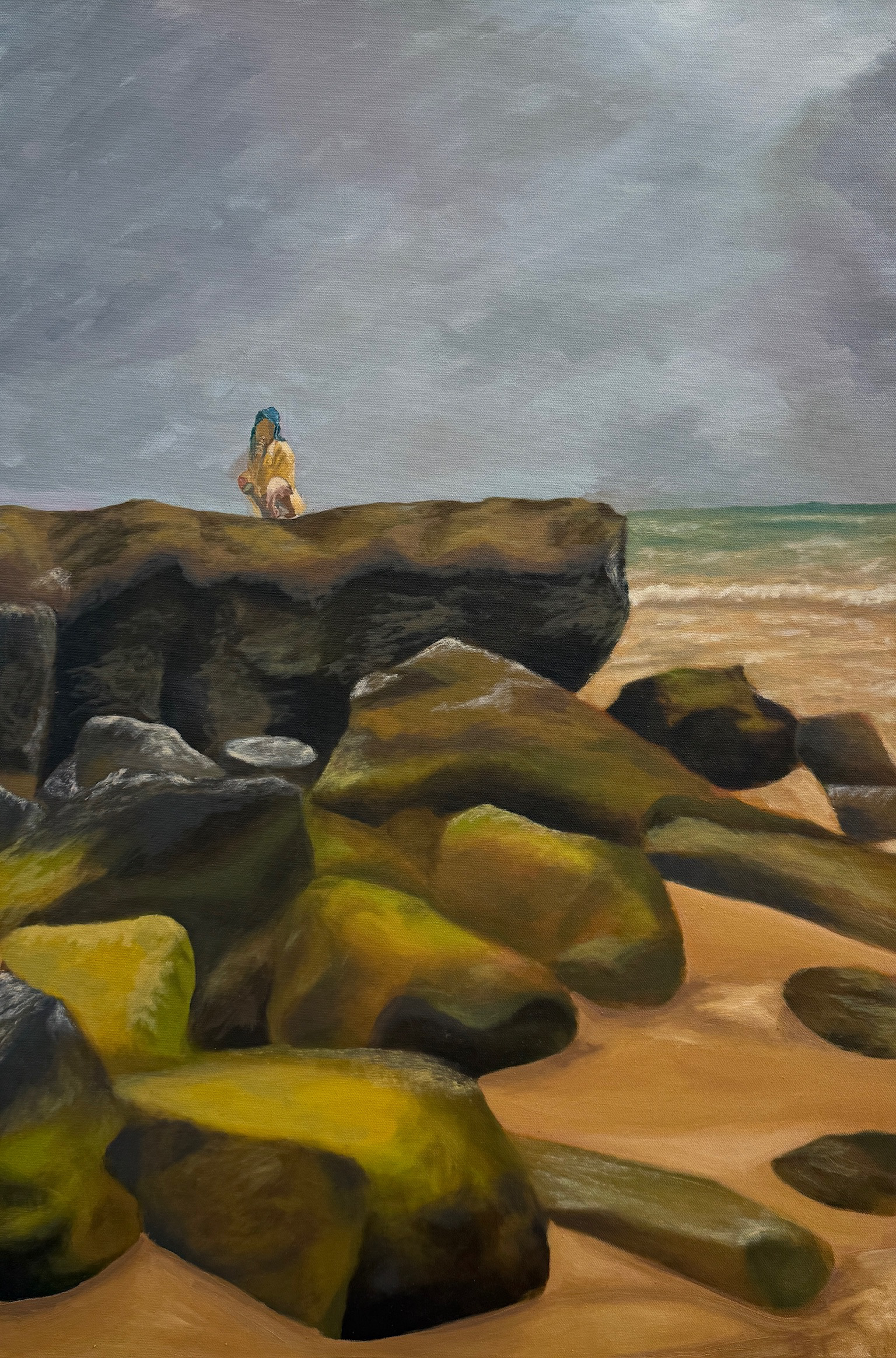
Familiar Face, 2024, 24 x 36 in.
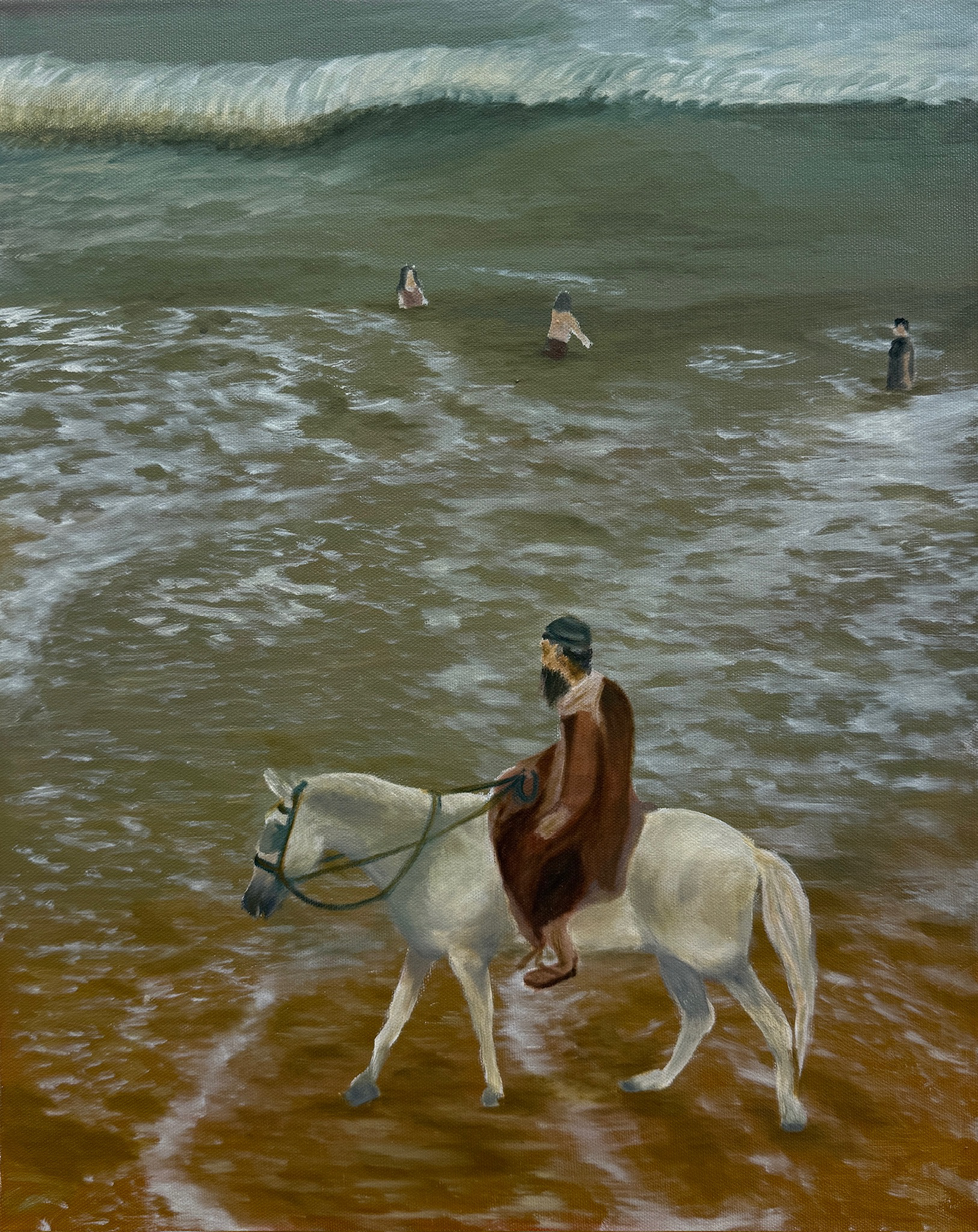
Current, 2024, 16 x 20 in.
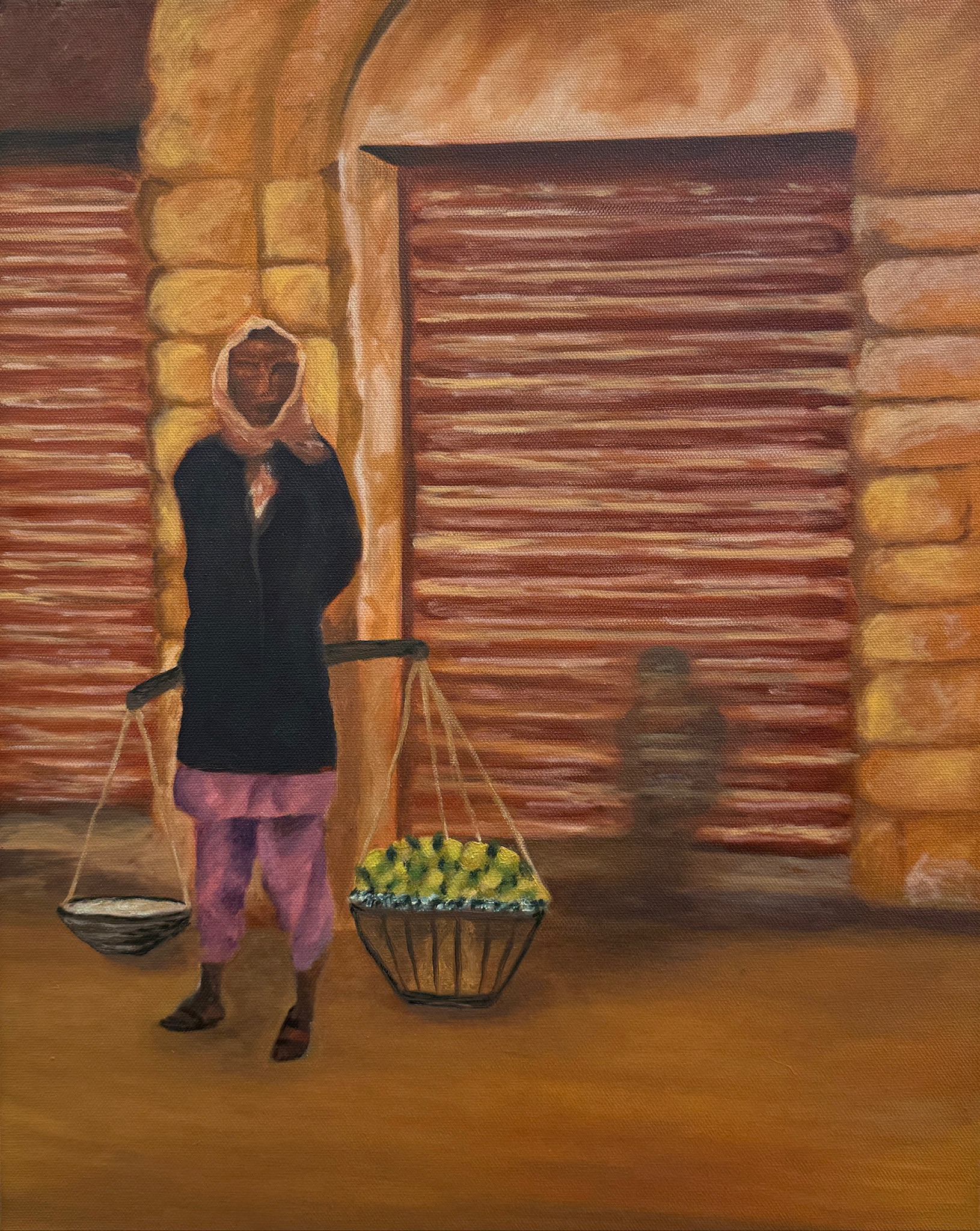
In Between, 2024, 16 x 20 in.
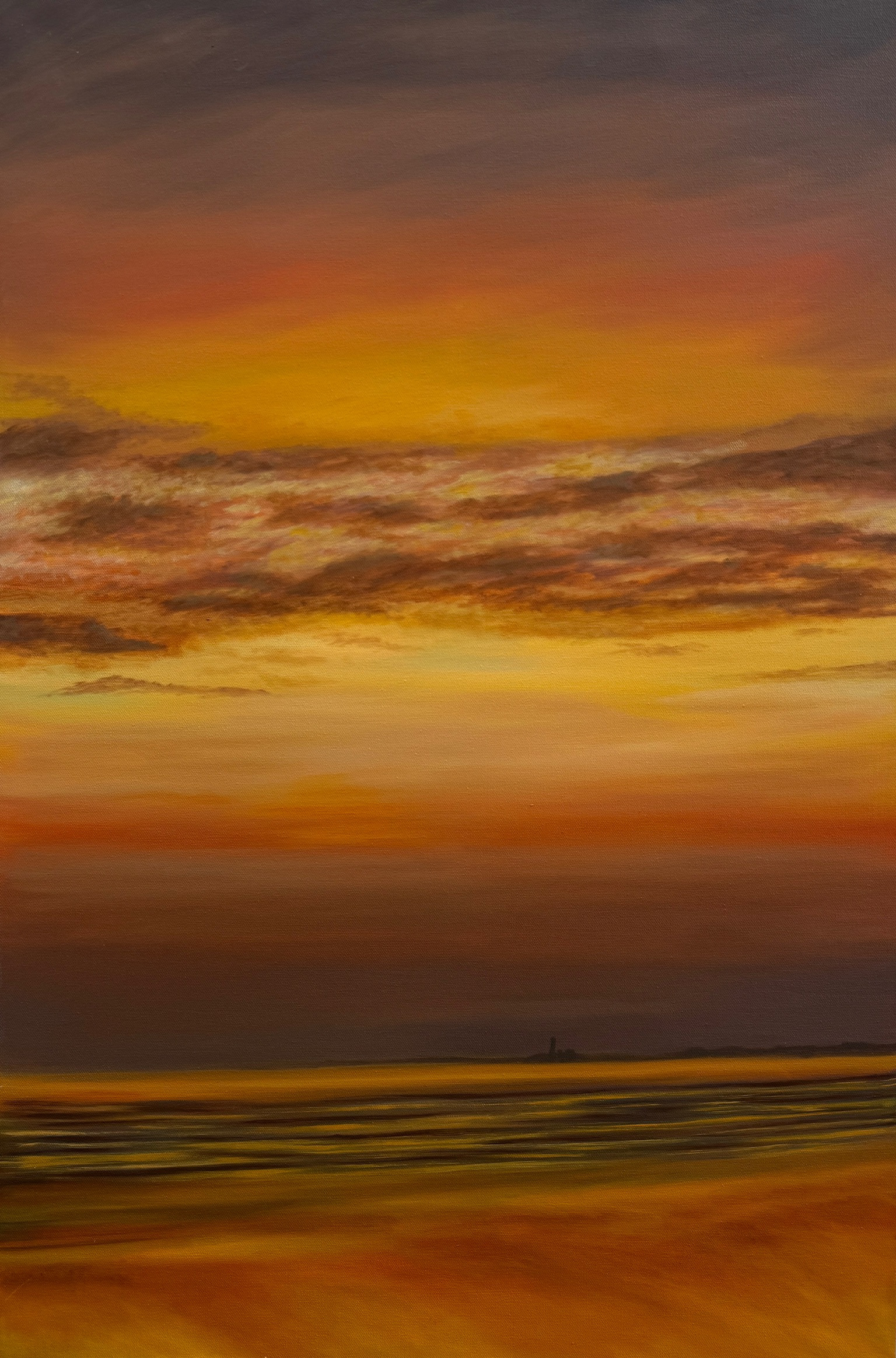
Untitled, 2024, 24 x 36 in.
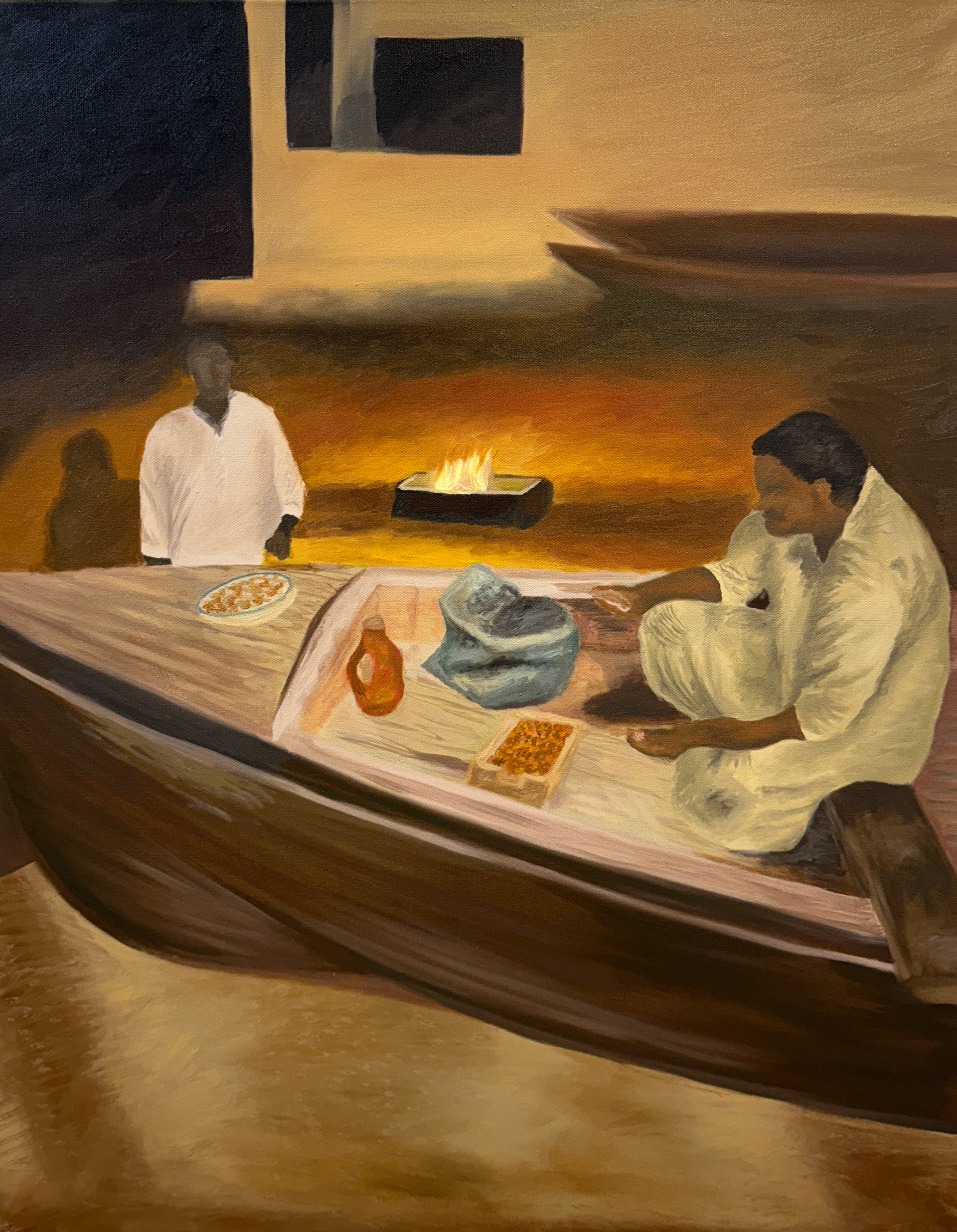
Prawn Bbq, 2025, 24 x 30 in.
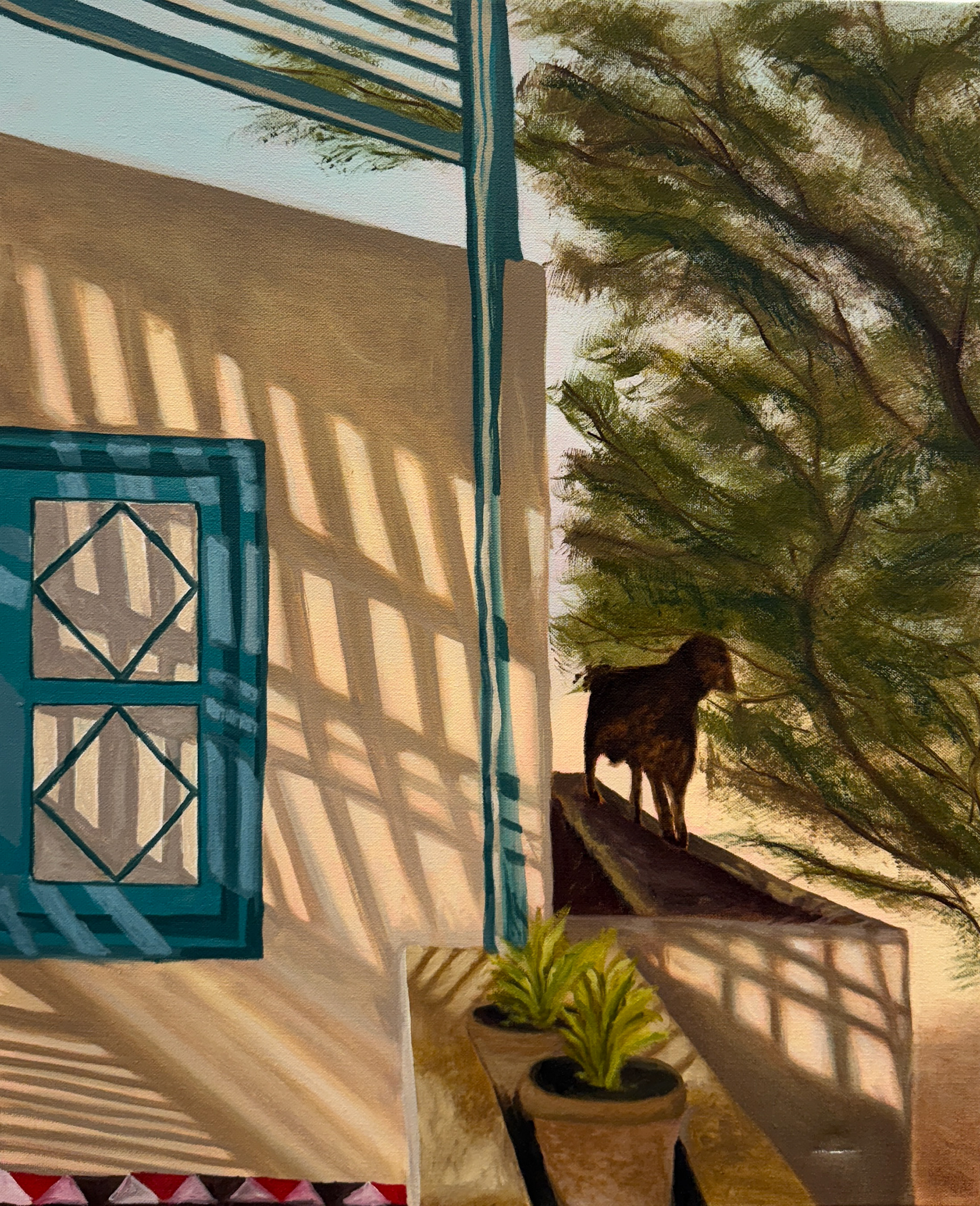
Co-exist, 2025, 20 x 24 in.
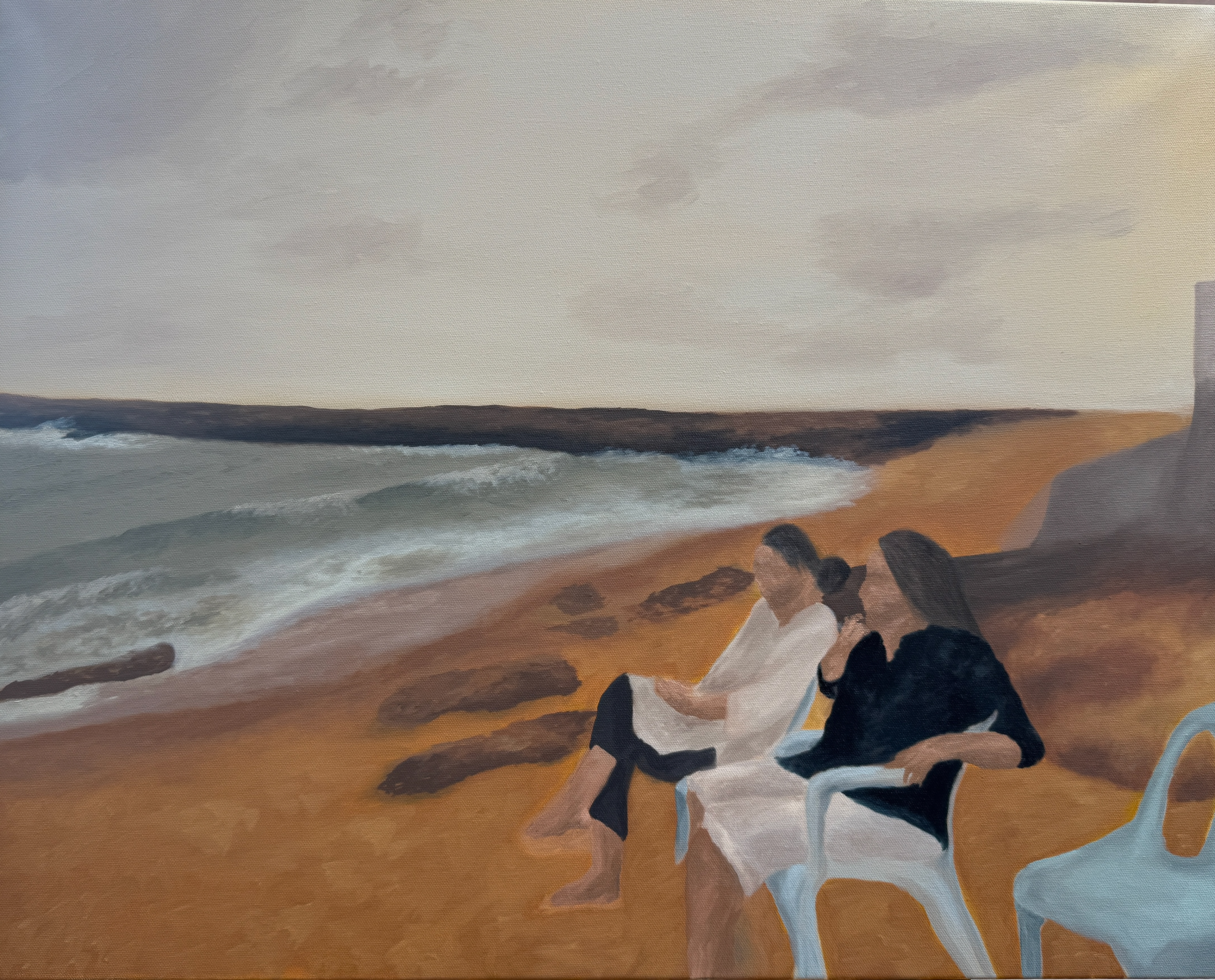
Crowded Shoreline, 2025, 24 x 30 in.
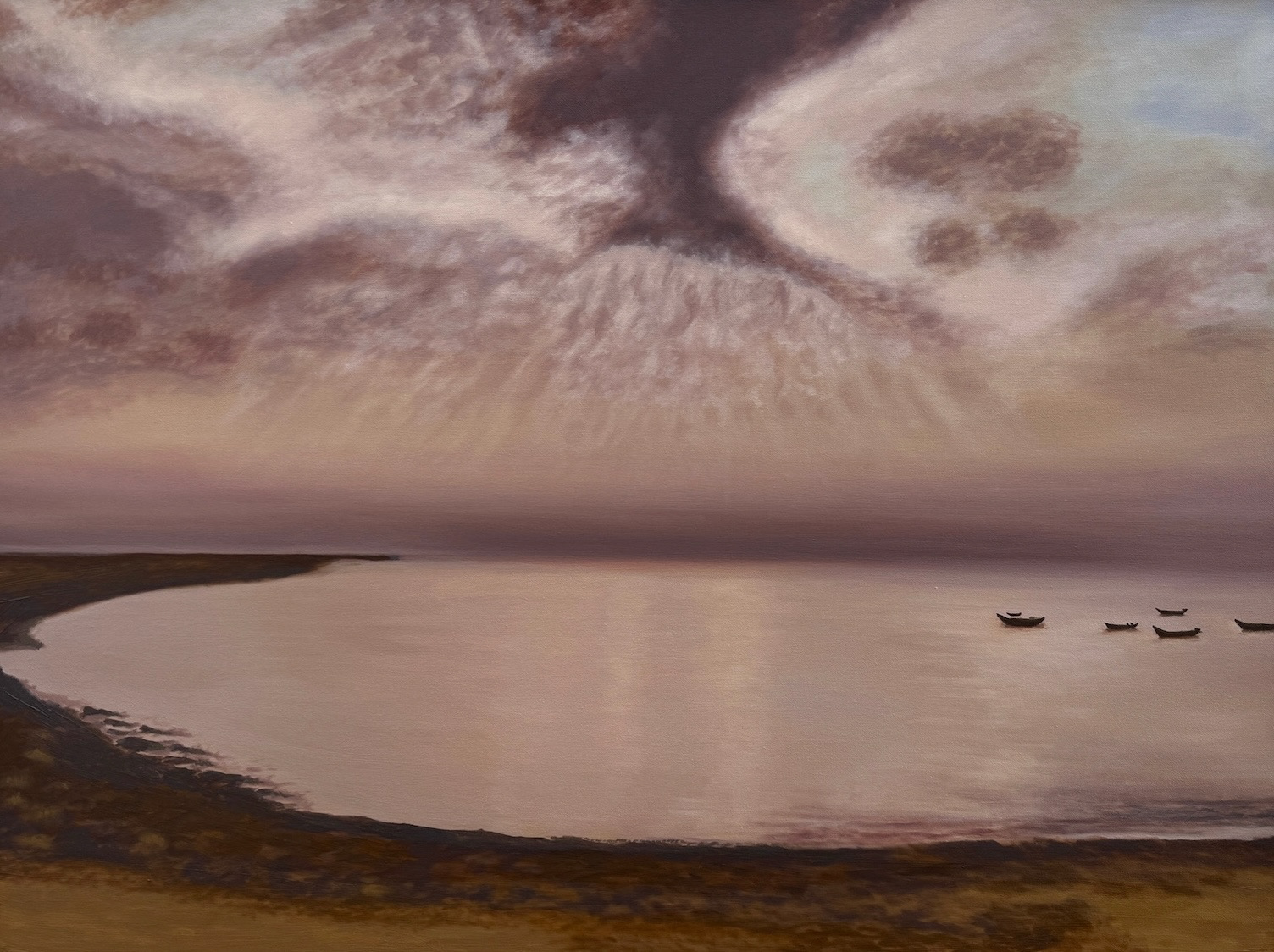
Quiet Kind Of Sublime, 2025, 30 x 40 in.